A Note on Why Not To Chase Trends
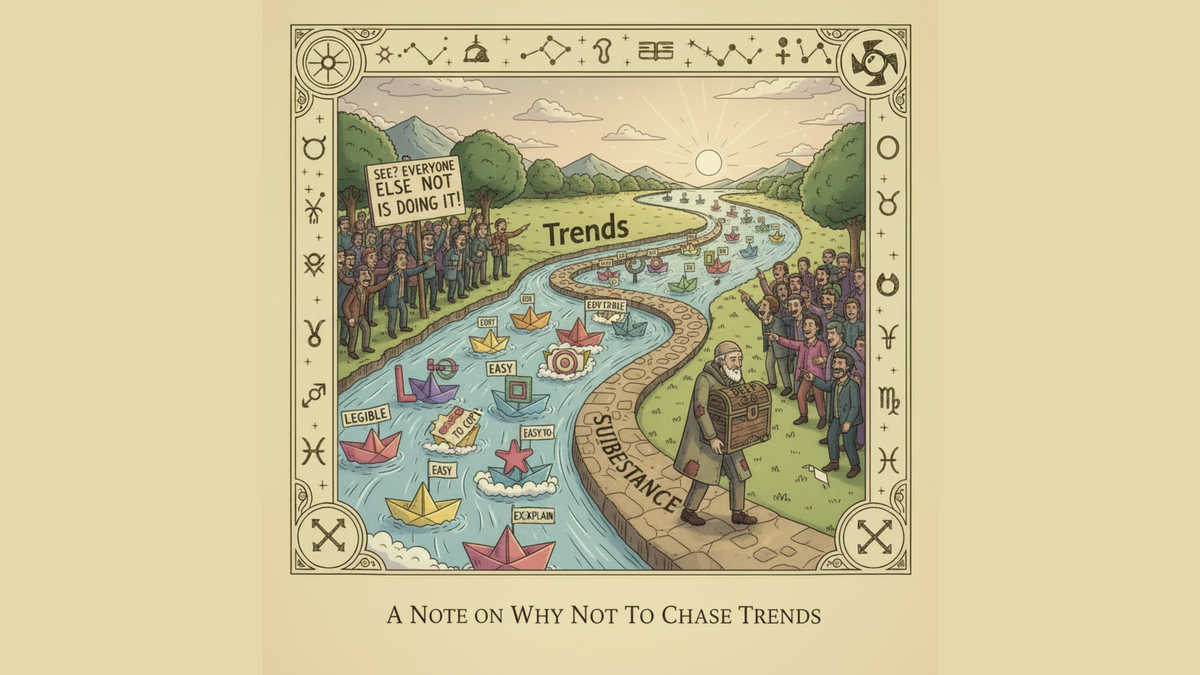
Trends don’t spread because they’re good. They spread because they’re legible. Easy to explain. Easy to copy. Easy to point at and say, “See? Everyone else is doing it.”

Beanie Babies were not toys.
They were assets. Allegedly.
People tracked releases like earnings calls. They bought duplicates “for the archive.” They sealed them in plastic like radioactive material. Price guides circulated. Scarcity was engineered. Stories were told.
For a minute, it worked.
Early buyers made money. Secondary markets bloomed. Confidence fed confidence. The object didn’t matter—the belief did. As long as enough people agreed these things were worth something, they were.
That’s the part marketers forget when they romanticize trends.
Trends don’t spread because they’re good. They spread because they’re legible. Easy to explain. Easy to copy. Easy to point at and say, “See? Everyone else is doing it.”
Beanie Babies collapsed the moment belief outran utility.
Kids stopped playing with them. Adults stopped pretending. Once demand detached from use, the whole system depended on new entrants believing harder than the last group. That’s not growth. That’s musical chairs with invoices.
Modern marketing trends follow the same arc.
A new channel emerges. Early adopters win because conditions are clean and competition is light. Case studies appear. Conferences fill. Tools sprout like mushrooms after rain. Soon, the trend is no longer an edge—it’s an expectation.
That’s when it turns into a Beanie Baby.
Budgets pour in after the asymmetry is gone. Brands buy in not because it fits their model, but because opting out feels risky. Performance plateaus, but participation continues because abandoning the trend feels like admitting you missed something important.
This is how teams end up optimizing collectibles instead of building businesses.
The problem isn’t novelty. It’s timing.
Trends reward those who arrive early and leave on time. Most organizations do neither. They wait for validation, then commit too heavily, then stay too long out of pride.
By the time leadership asks “is this still working?” the sunk cost has already been justified three different ways.
The antidote is boring and effective: insist on use.
What does this actually do for the business?
What breaks if we remove it?
Who would miss it besides the people paid to maintain it?
If the answers are fuzzy, you’re not looking at a strategy. You’re looking at a collectible with a PowerPoint.
The marketers who survive cycles don’t chase trends. They rent them. Light touch. Clear terms. Easy exit. No emotional attachment.
They understand that the goal isn’t to own the hottest thing on the shelf. It’s to build something that still works after the hype leaves town and the price guides stop updating.
Beanie Babies didn’t fail because they were silly.
They failed because people mistook scarcity for value and momentum for durability.
Marketing history is littered with the same mistake—just better dressed.
Enjoy trends. Study them. Even profit from them if the window’s open.
Just don’t build your house out of plush toys and call it strategy.