Course Correction: When The Market Changes Mid-Season
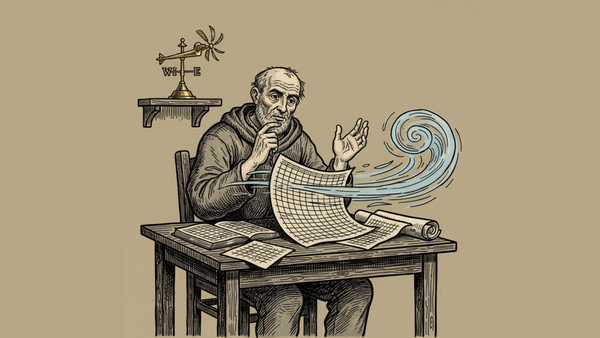
You set budgets with good information. You made bets that made sense at the time. The board nodded. The spreadsheets balanced. Everyone agreed the season was predictable enough to proceed. Then the wind changed.

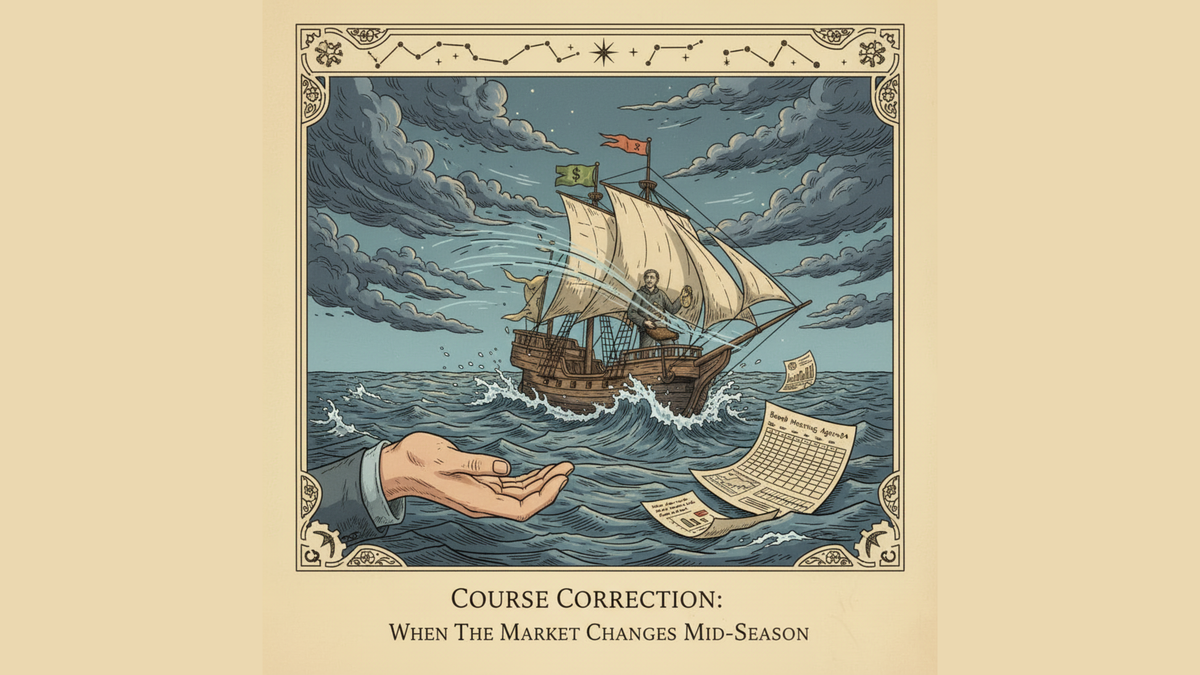
Every plan looks reasonable until the weather shifts.
You set budgets with good information. You made bets that made sense at the time. The board nodded. The spreadsheets balanced. Everyone agreed the season was predictable enough to proceed.
Then the wind changed.
Demand softened without warning. Costs jumped without explanation. A platform tweaked something small that broke something important. Suddenly the plan still exists—but reality no longer recognizes it.
This is where teams get stuck.
Some pretend nothing happened. They double down, hoping consistency will be rewarded. Others panic, rewriting strategy weekly and mistaking motion for adaptation. Both approaches fail for the same reason: they treat course correction as an admission of error instead of a requirement of navigation.
Markets change mid-season. That’s not incompetence. That’s the job.
The first mistake is framing the shift emotionally.
“This shouldn’t be happening.”
“We just need more time.”
“If we stay the course, it’ll normalize.”
Normalization is a comforting myth. Markets don’t owe you symmetry.
The second mistake is overcorrecting.
When conditions change, not everything changes. Most plans don’t fail wholesale—they fail at specific pressure points. The work is identifying what broke versus what simply feels uncomfortable now.
Course correction starts with subtraction, not reinvention.
- What assumptions no longer hold?
- Which metrics stopped being reliable first?
- Where is capital being spent to preserve appearances rather than outcomes?
Answering those questions requires slowing down when everyone expects urgency. It requires saying, plainly, “This plan was built for a market that no longer exists.”
That sentence feels dangerous. It’s also stabilizing.
Good corrections don’t erase the map. They redraw the parts that led you into shallow water. Budgets get reallocated, not abandoned. Targets get narrowed, not romanticized. Success gets redefined temporarily, with the understanding that survival is sometimes the win.
The hardest posture is honesty without theatrics.
- No dramatic pivots.
- No blaming the environment.
- No pretending foresight was impossible.
Just a clear acknowledgment that conditions shifted, here’s what changed, here’s what still works, and here’s how we proceed without lighting more money on fire.
Experienced operators know something younger teams don’t: sticking to a bad plan is more dangerous than changing a good one too late. Pride is expensive. Flexibility is not.
Course correction is not about being right again. It’s about remaining solvent—financially, strategically, and psychologically—long enough for the next opportunity to appear.
Markets reward those who adapt quietly.
They don’t applaud. They don’t explain themselves. They simply keep moving.
The teams that survive aren’t the ones with the most accurate forecasts. They’re the ones willing to look up mid-season, notice the clouds rolling in, and adjust their course before the storm decides for them.
That’s not failure.
That’s seamanship.
And it’s the difference between finishing the season bruised but intact—or explaining, afterward, why the plan made sense even as it sank.